The 5-second SaaS headline test (and how to write one that survives)
Most SaaS landing pages lose the visitor in the first five seconds — not because the product is bad, but because the headline is vague. Here is the rubric we built into TasteCourt to score them, and the four-step rewrite that turns a confusing page into a converting one.
Ger'Quia Abner
Founder & Design Engineer · TAGDESIGNS
A first-time visitor lands on your SaaS homepage. They have a tab open in another window. They have Slack pinging in the background. They have a vague intention to learn what your thing does, but it is competing with thirty-one other tabs and a calendar reminder that fires in four minutes. You have, at the absolute outside, five seconds before they bounce.
In those five seconds, exactly one element does the work. Not your hero illustration. Not your gradient. Not the testimonial wall you spent three weeks recruiting. The headline.
The five-second rule
We built TasteCourt — the verdict engine — around a single test. Strip every other element off the page. Show the visitor the headline alone, for five seconds, then close the page. Ask them: what does this product do, and who is it for?
If they cannot answer both halves, the headline has failed. Not could be better — failed. The visitor who bounces does not come back. The next visitor lands on the same headline. The compounding loss is brutal.
“A vague headline is the most expensive line on your site. Every visitor it loses, you paid for in ads, content, or time.
”
The 100-point rubric
TasteCourt scores landing pages on a hundred-point rubric across six axes. The headline carries the most weight, and it gets graded against four questions:
- ■Outcome named — does the headline name the after-state for the visitor, in language they would use? (25 pts)
- ■Audience named — does the visitor recognize themselves in it within the first three words? (25 pts)
- ■Differentiator implied — is there one phrase that makes this product not interchangeable with three competitors? (20 pts)
- ■Concrete, not abstract — does the headline reference real things (numbers, nouns, verbs) instead of category abstractions ("platform", "solution", "intelligence")? (30 pts)
The median first-draft headline scores between 35 and 50. The headline that passes the five-second test scores 80+. The gap between those two scores is almost always one round of focused rewriting.
The rewrite formula
The rewrite is not a creative exercise. It is a four-step substitution.
// THE FORMULA
- ■Replace every adjective with a noun. "Powerful analytics" becomes "the dashboard your CFO already trusts."
- ■Replace every category word with a verb. "AI platform" becomes "writes your release notes for you."
- ■Name the audience in the first three words. "For engineering managers who" beats "The leading solution for."
- ■End on the after-state, not the feature. "Stop losing leads to slow follow-up." beats "Real-time CRM automation."
Run the rewrite, score it again, and re-test it on a stranger. If the score moves twenty points and the stranger can paraphrase the product back to you in their own words, you have a headline. If neither happens, you have a noun problem — your category language has crept back in. Strip it again.
Ending on the money line
Every TasteCourt verdict ends with a single sentence we call the money line — the one rewrite that, if shipped tomorrow, would move the score the most. For most SaaS founders, the money line is some version of: replace your vague headline with one that names exactly who you help and what they stop doing.
It is unsubtle on purpose. The headline does the work. Make the headline do the work.
// KEEP GOING
Further Insights & Analysis
Why flat backgrounds are starting to feel dead
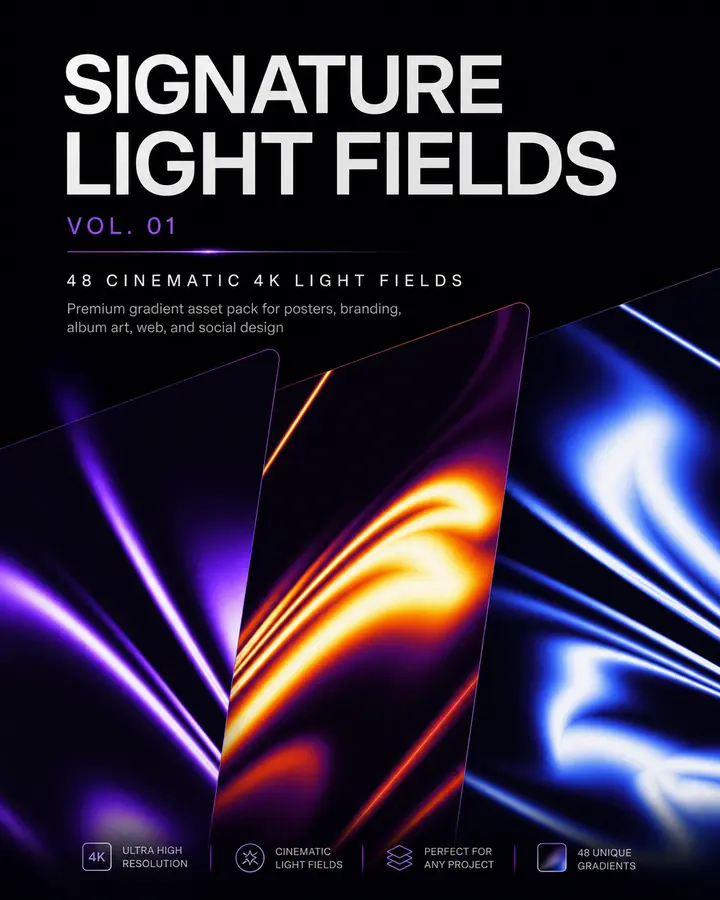
Digital design spent years becoming cleaner and easier to generate. Now the pendulum is moving toward atmosphere, texture, dimensionality, and visible creative intention. Here is how authentic light fields transform posters, album artwork, campaigns, and web interfaces.
Why every Awwwards site in 2026 is a design-engineering project
The handoff is dead. In 2026 the sites winning Awwwards, FWA, and CSS Design Awards are all built by people who design in the browser and engineer in the design tool. Here is what that actually looks like in production — React, Framer Motion, GSAP, WebGL, and the studio operating model that makes it ship.
AI brand systems in production: the end of the static brand guide
Static brand guides die in the first quarter. In 2026 the studio ships brand systems as living code — design tokens, generative palettes, AI-assisted asset libraries, and component primitives that compile into Figma, Photoshop, and the production website at once. Here is the architecture, the tooling, and the workflow.