AI brand systems in production: the end of the static brand guide
Static brand guides die in the first quarter. In 2026 the studio ships brand systems as living code — design tokens, generative palettes, AI-assisted asset libraries, and component primitives that compile into Figma, Photoshop, and the production website at once. Here is the architecture, the tooling, and the workflow.
Ger'Quia Abner
Founder & Design Engineer · TAGDESIGNS
Open the brand guide your last agency shipped you. The PDF, the one with the Pantone chips and the "minimum clear space" diagrams and the eighteen pages on incorrect logo usage. Now check when it was last updated. If you are honest, the answer is never. The version your team is actually using lives in someone's Figma — three sub-brands deep, half the colors swapped out, the typography overridden in two places, and a folder called final_v3_USE_THIS_ONE.
This is not a discipline problem. It is an architecture problem. Static brand guides die in the first quarter, every time, because the artifact is the wrong shape for what a brand actually has to do.
Static guides die in Q1
A brand has to compile. It has to render itself across a hundred surfaces — the website hero, the product UI, the Instagram template, the pitch deck, the trade booth, the packaging die-line, the email signature, the AI-generated illustration the social team will need at 4pm on Friday. A PDF cannot compile. It cannot enforce a rule. It cannot regenerate a palette when the brand pivots from B2B to B2C in Q3. It cannot write the alt text for the eighty-seventh hero image of the year.
What can do all of that is a living system — design tokens, primitives, generative pipelines, and an asset library that knows the brand rules well enough to make the next asset on its own.
“A brand is a system that compiles, not a document that sits.
”
The living system
The shape of a 2026-era brand system has four layers, and every layer has to be machine-readable.
- ■Tokens — colors, type ramps, spacing, motion curves, expressed as JSON or a TypeScript module. Single source of truth for every downstream surface. Edited in one place, recompiled into Figma styles, Tailwind config, and the production CSS in the same build step.
- ■Primitives — the buttons, cards, headings, layout slots — written once in code, with the same visual rules wrapped around them in Figma. The primitive is the contract.
- ■Generative pipelines — Midjourney prompts, Runway pipelines, ElevenLabs voice profiles, all parameterized off the same brand tokens so the AI-generated assets land on-brand without a designer babysitting every render.
- ■The asset library — Supabase or a similar managed store, indexed by brand axes (mood, surface, ratio), so the social team, the marketing team, and the LLM agent can all pull on-brand assets without re-asking the designer for the eighth permission.
Every layer is editable. Every edit propagates. The brand system breathes with the company instead of becoming a fossil three months after launch.
The toolchain (Midjourney → Figma → Code)
The pipeline that actually ships this looks like a relay race. Concepts and mood explorations originate in Midjourney, governed by a brand-locked prompt template that bakes in the palette, lighting, and composition rules. The strongest references graduate into Figma as a brand board, where the type, palette, and component primitives get specified against real surfaces. From Figma, the tokens compile into the production codebase via a sync step — Style Dictionary, or a custom node script — and from the codebase the same tokens are read back by the next round of Midjourney prompts.
The loop is intentional. The system gets stronger every time it is used, because every new asset reinforces the spec rather than drifting from it. The brand learns.
// WHAT TO ACTUALLY BUILD FIRST
Start with the tokens. Six colors, three type ramps, a spacing scale, and three motion curves. Express them in TypeScript. Wire them into Tailwind, into a Figma plugin, and into one Midjourney prompt template. That is the seed. The rest of the system grows out of those four files.
What it replaces
The PDF brand guide does not survive contact with the third social campaign. The brand system as code survives the company's next pivot, the next two product launches, and the next round of fundraising. It replaces the guide, the eight-tab Figma file, the Slack channel where someone asks for the logo at 11pm, and the agency retainer that exists mostly to redraw the deck for next quarter's offsite.
The studio model that ships this is, unsurprisingly, the operator model. One person — designer and engineer in the same brain — who can write the token file, draw the primitive, prompt the AI, and merge the PR. The studios still selling 80-page PDFs are competing with people who shipped a working brand system in the same week.
It is not a question of taste. It is a question of which artifact survives the next quarter. Build the one that does.
// KEEP GOING
Further Insights & Analysis
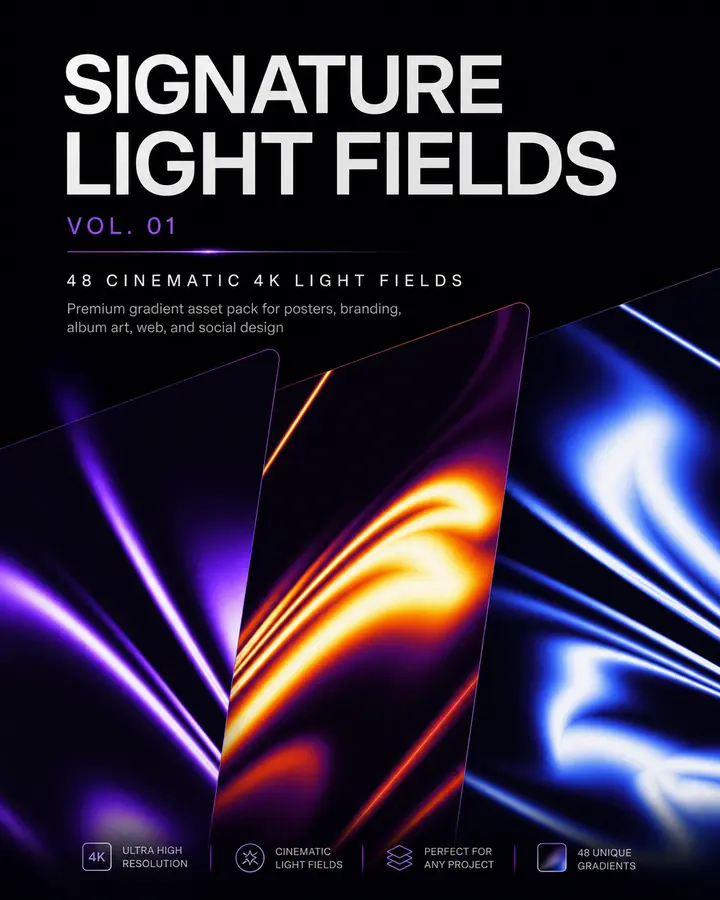
Why flat backgrounds are starting to feel dead
Digital design spent years becoming cleaner and easier to generate. Now the pendulum is moving toward atmosphere, texture, dimensionality, and visible creative intention. Here is how authentic light fields transform posters, album artwork, campaigns, and web interfaces.
Why every Awwwards site in 2026 is a design-engineering project
The handoff is dead. In 2026 the sites winning Awwwards, FWA, and CSS Design Awards are all built by people who design in the browser and engineer in the design tool. Here is what that actually looks like in production — React, Framer Motion, GSAP, WebGL, and the studio operating model that makes it ship.
The 5-second SaaS headline test (and how to write one that survives)
Most SaaS landing pages lose the visitor in the first five seconds — not because the product is bad, but because the headline is vague. Here is the rubric we built into TasteCourt to score them, and the four-step rewrite that turns a confusing page into a converting one.